• Tennis

    Tennis is an individual sport played with a racket and a springy ball. The game is played on a court, which can be made of asphalt/concrete, clay, or grass. At the professional levels, there is an umpire calling each point scored. Tennis is notable for its atypical scoring system (points are measured in 15- or 10-point increments, and sometimes not kept at all), but it is a game of precision first and foremost: this precision is even more impressive considering how large a regulation tennis court is.

    Teams
    Tennis is a completely individual sport, although there are doubles (2v2) leagues. Aside from some differences in serving the ball to begin play, the two versions of the sport have identical rules.

    Positions
    In doubles, one player typically plays the front half of his team’s court and the other plays the back half. In singles, a player is expected to cover the entire court himself.

    Play
    Play begins with a serve, where one player tosses the ball up and hits it over the net and onto his opponent’s court. A served ball must land within a specific area of the court called the service box. After that, players begin hitting the ball over the net, but controlling its trajectory such that it lands inside the opponent’s court.

    A player can score through several means:
    – the ball hits the ground twice before his opponent can return it
    – the opponent does not clear the net when returning the ball
    – the ball hits the ground and goes out of bounds before the opponent can return it
    – the opponent commits too many faults when attempting to serve the ball (this is very rare)

    Doubles
    Doubles tennis refers to tennis played with teams of 2 instead of individually. Doubles tennis is the same as singles tennis, but with some small rules changes. Firstly, the court is wider because the outer rectangular areas on the long sides (called “lanes”) are considered in bounds instead of out of bounds. Secondly, the back plays always serves.

    Normal doubles teams are either only men or only women. There is a category called mixed doubles, which allows teams made of one man and one woman.

    How to spectate
    Tennis is a very visual game, and because the entire court can be viewed from a single point, the viewer has just as much information as the players and commentators. The most efffective way to win a tennis game is to make the opponent’s returns as difficult as possible. This is done in a variety of way, but typical strategies include:
    – putting spin on the ball when returning it such that it bounces unpredictably
    – returning the ball to distant sections of the opponent’s court so that he must run longer distances to return it
    – returning the ball at varying speeds and angles (fast downward shots compared to a slow lob)
    The best players in the world combine these techniques and know how to counter them with only a split second to react.

    Furthermore, the surface used to make the court also influences which strategies will be effective. Clay courts make the ball travel slower because, when hitting the court, it loses more speed compared to the other materials. This means controlling strategies are more effective. Asphalt is harder, which means a power player will be able to return the ball at higher speeds.

    Grass courts are very rare, because they are expensive to maintain and only last for a short while (the grass court season is only a few weeks long). One of the reasons Wimbledon is distinct among tennis tournaments is that the tournament is played entirely on grass courts. Grass courts have an interesting effect on tennis play: instead of a single flat surface, the court is effectively covered in a cushion of grass, which greatly reduces the ball’s speed and bounce height.

    In addition to slowing down games, this means players are encouraged to intercept the ball near the net more often, and the ball is more difficult to return in general. Players much physically move lower when returning the ball because it loses so much bouncing force when making contact with the grass.

    Scoring
    To make things, brief, tennis’s scoring system resembles no other widely played professional sport. A match between two players is divided into sets, which are subdivided into games. A player must win a game by scoring at least 4 points, and scoring at least 2 points more than his opponent. If both players are tied at 4 points, then numerical scores are abandoned and the umpire instead tracks who has the “advantage” in the score.

    Within a game, points are not individual. The first two points in a game are worth 15 points each, then 10. Thus, a player may have: 0, 15, 30, 40 points. After the 40th point comes the game-winning point, provided the player has at least a two-point advantage over his opponent.

    A set is not composed of a particular number of games: instead, a player must win at least 6 games and have at least a 2-game lead over his opponent. Thus, the maximum score in a set could be 6-4. Otherwise, the advantage system used in games still applies here – the players continue to play games until one accrues a two-game lead over his or her opponent.

    Match scoring counts the number of games and unlike the other forms of scoring, it does use a specific number, which is always odd to ensure a decisive winner. Most tournament matches for men and women are best-of-3 sets, but more prestigious games such as the “Grand Slams” of the US, Australian or French Opens, the men play a best-of-5 match.

  • Soccer

    This article is about soccer, called “football” outside of North America. Click here for gridiron football.

    Soccer is the world’s most popular sport, and is played in just about every country that can field a team. Internationally known as footabll or “the beautiful game,” it is a game loved by billions for its simplicity and accessibility.

    Introduction

    Soccer is the world’s most popular sport, and is played in just about every country that can field a team. Internationally known as football or “the beautiful game,” it is a sport loved by billions for its simplicity and accessibility.

    Many cultures around the world have developed kicking games, but modern soccer is most similar to sports played by the ancient Chinese and Greeks, as well as medieval Europeans. The European games, and particularly the games played in England, are the most direct roots of modern soccer.

    A modern soccer game takes nearly two hours (two 45-minute halves and a 15-minute break at halftime) and is played on a large grass field with two teams of 11 players, including a goalie. Each team is loosely divided into offensive and defensive players, but each soccer player has a lot of freedom to adapt to any given situation.

    How to Play

    Playing soccer is simpler than most other sports: get the ball from the other team and maneuver it into the other team’s net without using one’s arms or hands. Players cannot tackle each other, but they can be somewhat aggressive when trying to steal the ball from an opposing player. Shooting the ball into a net is worth one point (“goal”) and is the only way to score, which means soccer scores tend to be pretty low: three points is typically the maximum for most games. Goalies are the only players allowed to use their arms and hands to handle the ball.

    If a player violates the rules (using his arm, hurting another player, going out of bounds), the most common punishment is a penalty kick given to the other team: this lets the team attempt to score directly on the net by kicking the ball in from the sidelines. Defending against a penalty kick typically involves the entire team forming a human wall in front of the net and the goalie covering whatever is left. Penalty kicks are very important at professional levels due to most teams’ strong defense.

    How to Spectate

    Soccer can seem boring at first glance: much of the game is spent with players running up and down the pitch, but rarely shooting at the net and scoring even less.

    In truth, the game is more focused on strategy and positioning. As many professional sports have evolved to become more aggressive and flashy, soccer has remained fairly defensive or neutral (although teams are structured to play more offense and attempt to score more often). There are many teams that focus on defensive or controlling styles rather than straightforward offense.

    There are four general patterns of soccer play:
    Aggressive, with the ball: players will try to break through the opposing team’s defense and force shots on goal.
    Aggressive, without the ball: players will hound the ball carrier and isolate him from his teammates so he cannot protect it.
    Defensive, with the ball: players will advance in groups to protect the ball and have a better chance at withstanding the enemy’s defense.
    Defensive, without the ball: players will form a defensive wall to prevent the opposing team from breaking through.

    Watching soccer is about following these different strategies and how each team tries to apply them.

    Leagues

    FIFA (Fédération Internationale de Football Association, or the International Federation of Association Football) is the main oversight body for soccer played around the world. They organize the World Cup, the most prestigious soccer tournament in the world, which is open to teams from every nation on earth.

    At a continental level, soccer is most popular in Europe, Africa, and South America. North America has some national leagues, but the game is far less popular than other national sports like hockey or gridiron football.

    Soccer is also an Olympic sport, so countries that don’t have a deep roster of professional talent can still compete with amateur athletes.

    Trivia

    Coming soon.

  • Ice Hockey

    Introduction

    Ice Hockey is one of the world’s most popular ice sports and is played mostly in places that have cold winters: Canada, Europe, Russia, and the U.S.

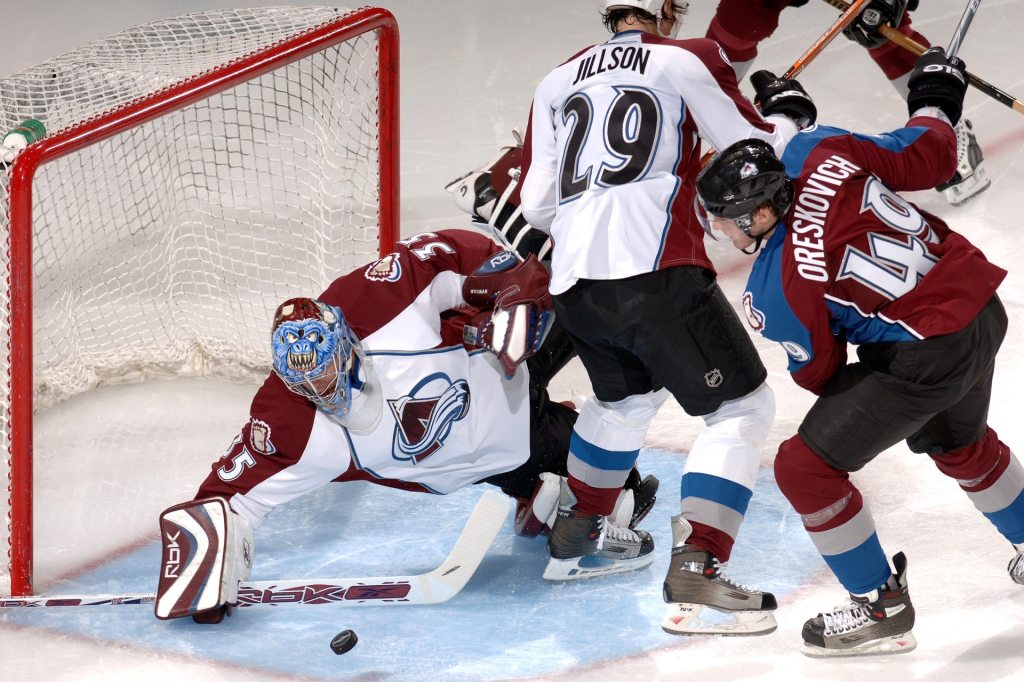
    Hockey is played on a large ice rink with colored markings that divide it into smaller sections. Teams are small: six players on the ice at a time, including the goalie, two defensemen, and three “forwards” (offensive players) called a center, a right wing, and a left wing. Hockey has the distinction of requiring a lot more equipment than most other sports, because a hockey player needs quite a lot – a stick, a full set of body pads, a helmet, and two skates.

    Hockey is not an extreme sport, but it is a contact sport. Players will body check each other frequently, and while this might seem violent viewing, the sport has matured quite a lot since its birth.

    How to Play

    A standard hockey game is 60 minutes long, divided into three 20-minute periods with short break in between. Each team’s net is at the far end of the rink, and the ice markings divide the rink into four rectangular sections: one around each net and two in the middle. Play begins in the middle of the neutral zone in a face-off circle, where the puck is dropped and each team’s center fights for possession. Trying to pass the puck to a teammate who is more than one section away is a foul play called icing, so the puck is usually brought up and down the ice by players rather than passed around.

    A goal is scored whenever the puck is shot into a team’s net, and the team with the most goals at the end of the game is the winner. In the event of a draw, the teams play additional periods until one team finishes with a goal lead. During play, hockey players use their sticks to handle the puck, pass it to teammates, and take shots on the net. Doing all of this while skating on ice is very difficult, and it can take a long time for a hockey player to develop these skills.

    Hockey is a contact sport and there is a lot of physical punishment during a game, but there are rules: players must keep their sticks below their waists, and cannot use them as weapons. A check – which is one player slamming another into the boards or the ice – must follow certain limits or the checking player risks a penalty from the referee. Incurring a penalty can mean a player is put in the penalty box, and his team will be down a player for a short time – up to two minutes in severe cases.

    How to Spectate

    Spectating hockey can be difficult at first: players are rushing up and down the ice, the puck is very small, and the positions can change on the fly as the situation calls for. Players can also be changed during play, which means that a hockey team could potentially cycle through its entire roster in a game.

    More than other sports, it is important for spectators and viewers to follow the puck: the place of the puck determines whether a team is on offense, on defense, about to score, or sitting in a comfortable position. Players don’t often have the puck stolen from them, but with five opposing players on the ice, being checked and losing possession is a constant risk.

    Leagues

    In Canada and the U.S., ice hockey is mostly monitored and regulated through the National Hockey League (NHL). Although the NHL includes many American teams, the majority of its players and most of its star players are Canadian. Hockey is a popular sport at the college/university and high school levels in Canada.

    Outside North America, there are many leagues in Europe for the various nations there, and many of these leagues distinguish between amateur and professional play, just as in North America.

    European, Asian, and Russian ice hockey feed into the Kontinental Hockey League (KHL), which is the premiere professional league outside of the NHL.

    Trivia

    Fighting is also a somewhat common occurrence in hockey, not just because players’ tempers can flare on the ice. Fights between players are a historical way for teams to settle their differences on the ice, and in the past there were even players who specialized in getting into fights. These players, colloquially called “goons,” would start fights with key players on the other team. Once the fight was broken up and both players were sent to the penalty box, one team would be down a goon – no great loss – and the other team would be down its key player.

    The practice of being a goon has mostly disappeared in professional ice hockey, and teams do not retain players simply for their ability to fight. Fights have shifted into a way for players to blow off some steam on the ice – provided nobody gets hurt.

  • Football

    This article is about American and Canadian gridiron football. Click here for soccer.

    Introduction

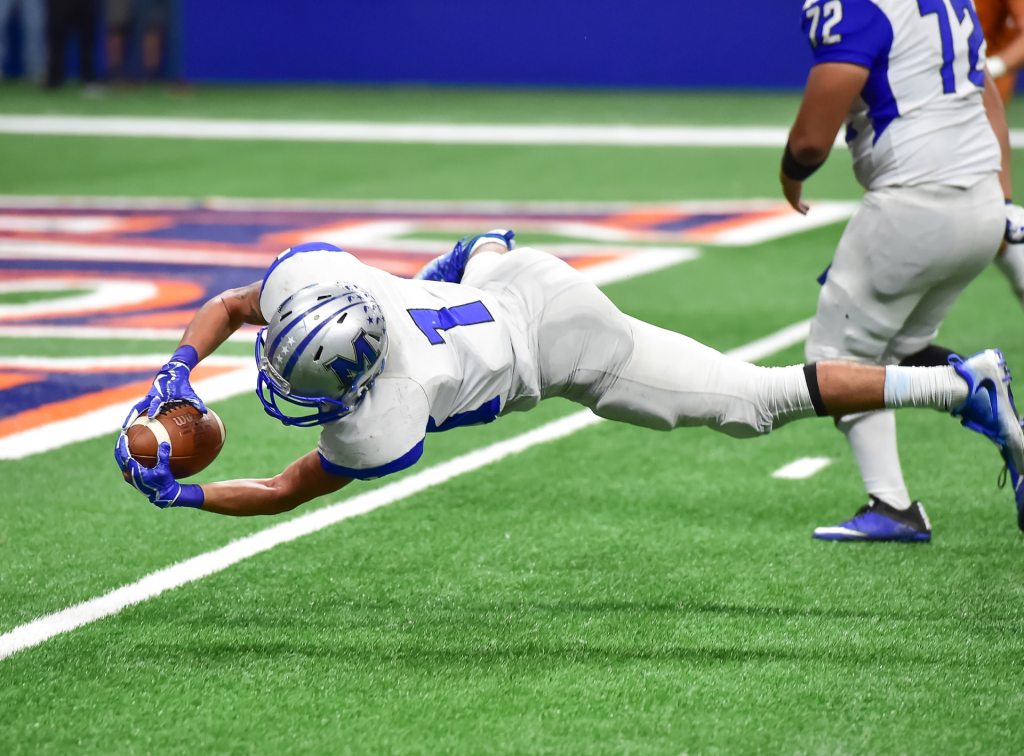
    Football is a game played almost exclusively in the U.S. and Canada, although it has some similarities to Rugby and other sports which are popular in other countries.

    Football is truly a team sport due to its large team size: there are lots of specialized positions, and a team will field 11 players at a time with many others in reserve for specific plays and attack patterns. A full football team in a major league such as the American National Football League (NFL) will have as many as 45 players available in any game.

    This article will focus on American football rules. Canadian football rules will be explained at the end.

    How to Play

    A game is divided into four 15-minute quarters. A team wins by scoring the most points by the end of a football game, and points are scored in two ways:
    – Touchdowns: a player runs the football into the opposing team’s end zone at the far end of the field. 6 points.
    – Field goals: a player kicks the football between the “uprights” (metal posts) in the end zone. 3 points.
    Touchdowns also let the scoring team try to score a field goal immediately for another 1 point.

    At the start of a game, possession of the ball is determined by a coin flip. The team with possession is the offensive team, which tries to advance and control the ball down the field while the defensive team tries to stop them. Play begins when the player in the quarterback position is “hiked” (passed) the ball, and ends when the offensive player with the ball is tackled to the ground or the ball is intercepted. Once the ball is “down” (dead), play ends.

    The offensive team has four downs (chances) to advance the ball at least 10 yards, as indicated by the lines on the field. If the offensive team advances the ball and retains control, their position advances accordingly and they get another four downs to try to advance at least another 10 yards; this is commonly done by having the quarterpack pass the ball to a player in a good position down the field, but the ball can be carried forward if the quarterback does not have any good opportunities to pass.

    How to Spectate

    Despite having large teams with many different types of players, football is pretty simple to spectate – especially major league football like the NFL, where the production will focus on the action reliably.

    Most of the action in a football game happens around the “line of scrimmage,” which is the line formed in front of the offensive team’s quarterback to protect him while he throws the ball to an open player down the field. If the defensive team can break through the line and “sack” the quarterback (tackle him before he can throw), then that’s the best outcome for them. The offensive team will do everything they can to protect the quarterback while still having enough runningbacks (players who run downfield and receive the ball from the quarterback) so the defensive team can’t block all of them.

    The trade between having a wall around the quarterback and having a lot of runningbacks open downfield is what defines football’s offence. Too many protective players and the quarterback won’t have good options. Too many runningbacks and the quarterback will be sacked before he can throw.

    Leagues

    The American NFL is the premiere football league in the U.S. and one of the most widely watched sporting leagues in the world. The Canadian Football League (CFL) is Canada’s premiere league. Despite football not being as popular in Canada as hockey, the sport has a solid following there.

    Football is so popular in the U.S. that there are several leagues below the NFL for people to play and watch. College football, organized through the National College Athletics Association (NCAA) is a common way for aspiring athletes to attend college or university via athletics scholarships. Many of these players dream of becoming professional players in the NFL, and talent scouts keep a close eye on NCAA football leagues to see emerging players.

    Below the college level, high school football is a popular sport in both the U.S. and Canada. Sometimes senior players are scouted and offered scholarships, but at this level players are mostly there to stay in shape and have fun.

    Trivia

    Football has been under scrutiny in recent years for the amount of physical contact that its players undergo. Everyone on the team wants to be a tough guy who can shrug off hits, but taking too many hits to the upper body and head can have serious consequences. Concussions in particular are a source of long-lasting physical trauma among many players. In some cases, brain conditions like Alzheimer’s and dementia can have early onsets due to frequent concussions.

  • Basketball

    Introduction

    Basketball is a simple sport that is mostly popular in North America, and mostly within the U.S., although it was invented by a Canadian man. Basketball is popular because it combines fast action and small teams that make it easy for spectators to follow.

    Basketball is also one of the cheapest sports to play in North America due to the prevalence of basketball courts in public parks. All any basketball players need is a ball and some comfortable running shoes.

    How to Play

    The rules of basketball require that both teams field five players at a time, generally three offensive and two defensive. Throwing (“”shooting””) the ball through the hoop/net is worth two points, or three points if the shot came from outside the three-point line.

    The ball itself must constantly remain in motion: players can only move with the ball if they are dribbling it (bouncing it up and down), and if they ever stop dribbling then they cannot move. Trying to take the ball from another player can be quite physical, so players often pass the ball to their own teammates to protect it and help set up better shots on the net.

    There are rules that prevent teams from passing the ball around and not advancing the game, and there is also a shot clock that will forcibly give possession to the other team if the current team does not attempt to score quickly enough.

    How to Spectate

    The positions on a basketball team are:
    – 2 defencemen who protect the court near the net
    – 2 forwards who proactively make plays and try to steal the ball from the other team
    – 1 center who is focused on making plays and is supported by the other team

    Basketball can feel overwhelming, but the game tends to follow a simple pattern: one player gets the ball and brings it to the other team’s half of the court to try to score on their net. If the defending team successfully gets possession away from the attacking team, they have the chance to reverse the situation and do the same.

    The sport of basketball might seem chaotic, but this loop is repeated throughout a game. What makes it interesting is the aggression – intercepting a pass or stealing a ball from a player immediately changes what each player wants to do in the game.

    Leagues

    The U.S.’s National Basketball League (NBA) is the premiere league in North America and Canda, although there is only one Canadian team in it. Despite Canada’s involvement in basketball’s origins, the sport is not very popular there outside of big cities like Toronto.

    Outside of North America, basketball is less popular, but there are some dedicated national leagues in Europe (Spain, France, Greece) and a Chinese league as well.

    Trivia

    In 2019, the Canadian team the Toronto Raptors was able to make it all the way to the playoffs (the league finals for each season) and beat the Golden State Warriors. This was a big surprise to most spectators, because the Raptors have historically been one of the weakest teams in the NBA.

  • Baseball

    Introduction

    Baseball is a sport most popular in the United States, but it has strong communities and leagues in other countries as well, like Japan and Cuba. Baseball is famously known as America’s Pastime, a name which references both its origin in the U.S. and the values reflected by its rules. Many people in the U.S. know how to play and how to spectate baseball, even if they aren’t pro players.

    Unlike most other sports, baseball is strictly even: nine innings ensure each team has plenty of time to score, and each position on the team requires different skills. A baseball team is a well-polished set of tools producing something greater than the sum of its players.

    How to Play

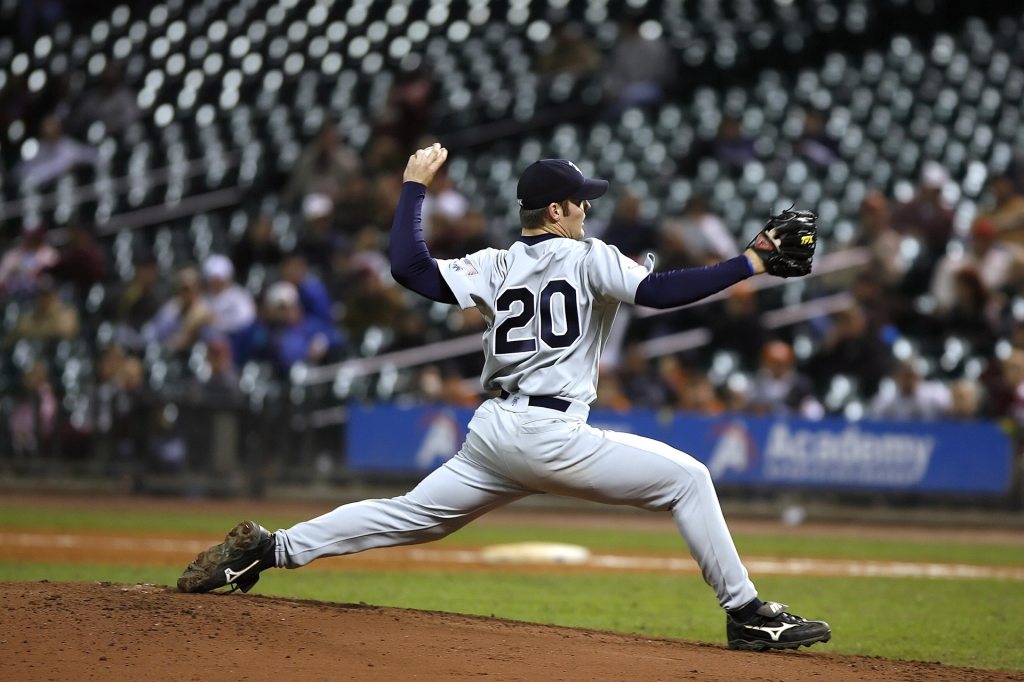
    Two teams of nine players each take turns batting and fielding during each inning. The batting team sends out a batter, who must hit a ball thrown by the pitcher before accumulating three misses (“strikes”) and being declared out (“striking out”). If the batter hits the ball, he tries to run as far around the bases as he can. Meanwhile, the fielding team either catches the ball out of the air, which means the runner is out, or picks it up from the ground and throws it to the runner’s next base. In the second case, the runner can retreat to the base behind him unless there is another runner there, in which case he is forced out. The batting team’s “half” of the inning is over when it accumulates three outs. Runners can only advance around the bases when the ball is live, meaning the fielding team doesn’t have control of it yet.

    A runner who makes it all the way around the bases and back to home plate scores a point for his team. The batting team puts a lot of strategy put into the batting order, the type of batting approach (bunting, line drives, fly balls), and how to best load/overload the bases with runners in order to force the fielding team to make mistakes.

    How to Spectate

    A baseball inning is defined by how far ahead the batting team’s runners are. Most of the game takes place around first base, which demands hard work from the first baseman because he will always be receiving a ball.

    Batters rarely actually advance to first base, and this is due mostly to the skill of major league pitchers. The duel between a pitcher and a batter is the focus of many baseball innings, and a successful pitcher can potentially end an inning in nine clean pitches if he’s really on fire.

    More commonly, there is a game within a game, where the pitcher gives the batter pitches that are hard to hit cleanly, but still inside the strike zone. In this way, the batter is in a losing proposition: he either does nothing and likely takes a strike, or swings and misses to guarantee a strike. However, pitching perfectly is very difficult – a pitcher who throws too wide, too high, or too low gives the batter a “ball,” which does not count as a strike. Every batter has different strengths and weaknesses, so a pitch that one batter might struggle to hit would be easy pickings for another.

    A batter is usually off the plate in one of two ways: three strikes and he’s out, and the batting team must field another batter, or four balls and he walks to first base automatically. Batters employ many techniques to hit as many pitches as they can, and to encourage the pitcher to throw pitches they can ignore to rack up balls.

    Because a major league pitch is so fast, batters cannot react in the perfect way every time: they must commit to covering a certain “section” of the space above home plate, and pitches outside of that space are ignored.

    Leagues

    Baseball is most popular in the United States, where Major Leage Baseball (MLB) is the premiere league. There are also regional leagues for lower divisions, many of which have “farm teams” which exist not to compete strongly themselves but to create strong players who can move up to the major leagues. There are also many recreational leagues for adults and children.

    Outside the U.S., baseball is popular in Japan and Cuba. The highest league in Japan is the Nippon Professional Baseball league, which dates back to 1934.

    In Cuba, the system is much more stratified compared to either the U.S. or Japan: each province has teams that compete at various levels, and the most successful teams each season come together in the Cuban National Series. The National Series winners advance to play in Caribbean leagues and are often chosen to represent the country in international competition.

    Trivia

    In the early 20th century, how teams played baseball changed when the MLB threw out the “dead ball era” in favour of rules that encouraged higher scores and less underhanded play. In the dead ball era, one physical ball was used throughout a game and it would become scuffed and battered after a few innings. This made it harder for batters to hit far, and enabled the fielding team to control the infield much more – the pitcher could even tamper with the ball before throwing it. Players generally had to scrape for runs and rarely got on base. The new rules, which still affect baseball today, encourage higher scores and more consistent batting throughout a game.

    Baseball has a huge list of jargon and slang words that have had a huge influence on American English. Some examples include:
    – “Playing ball with” someone, meaning to do business with someone.
    – “Batting a thousand,” meaning doing everything right. This phrase comes from a player’s theoretical maximum batting average of 1.000, which would mean getting a hit every single time he is at bat throughout a season.
    – “Curveball,” meaning something unexpected.
    – “Heavy hitter,” meaning someone powerful or commanding.