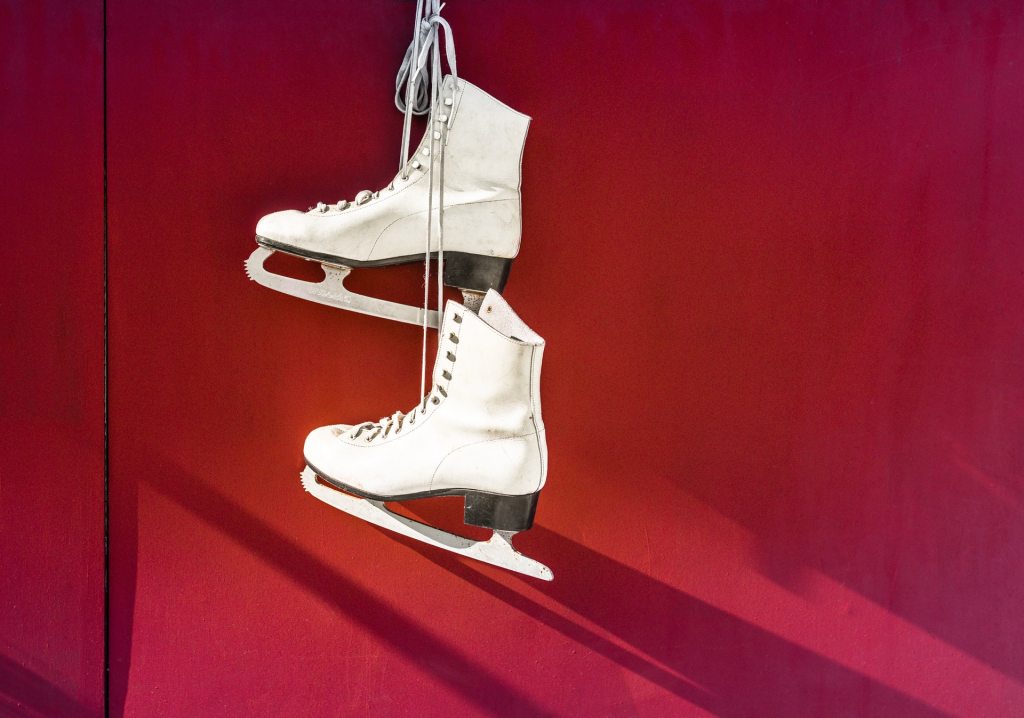
Olympic skating is a broad category, but the majority of events are speed skating and types of figure skating for solo and pairs events of varying lengths. With the beauty of dance and the precision of an icepick, figure skating is a visually dramatic sport – even if it can become too flambuoyant for its own good at times. Speed skating is much simpler, but remains appealing due to the startling speed of its competitors.
History
Funnily enough, skating and ice hockey were initially featured in the Olympic Summer Games before the Winter Games were recognized as a separate event. Thus, they are slightly older than other winter olympic sports, dating back to 1908.
Differences
Figure skating is the act of performing a dance while on skates; notably, figure skates are narrower than hockey or speed skates, and have a spur at the front of the blade to give the skater more control when balancing. There is some overlap with traditional ballet tricks such as pirouettes and spins, but there are many figure skating tricks unique to the sport.
The official olympic events are men’s singles, women’s singles, pair skating, and ice dance. The singles events are straightforward: the performer has a set amount of time to perform tricks while accompanied by music of his choosing. Pair skating is the same, but with two skaters working together. The ice dance, in addition to being the youngest type of figure skating at the olympics, is effectively ballroom dancing done on ice. This different tradition of performance gives it a much more intimate and condensed feeling compared to pairs skating.
Speed skating is the polar opposite of figure skating: competitors race around a track, aiming to go as fast as humanly possible on ice. The divisions of the sport resemble different types of track or velodome races, with different categories rangig from 500 metres (practically a sprint) to 5000 metre marathons. There are also relay and team events.
Speed skaters use specialized skates that have long, flat blades that give the skaters as much grip on the ice as possible without sacrificing velocity. Because speed skaters only ever turn left, the challenge to compete at an Olympic level comes from optimizing every single part of the ovoid track. On corners, this means leaning over the boundary line and practically skating while horizontal, before snapping back up to a wide, powerful stance to gain speed on the straightaways.
Short track events, especially team events, complicate things further: it’s possible to have eight skaters on the track at a single time, each of whom is jockeying for position at highway speeds of around 45km/h (or about 28mph). Passing on the corners is virtually impossible due to the additional distance traveled, so competitors must time their attacks perfectly or risk losing everything to a crash.
Olympians
[mention any notable athletes who achieved success at the olympic games in this sport]
 Watchingallsports.com
Leave a comment